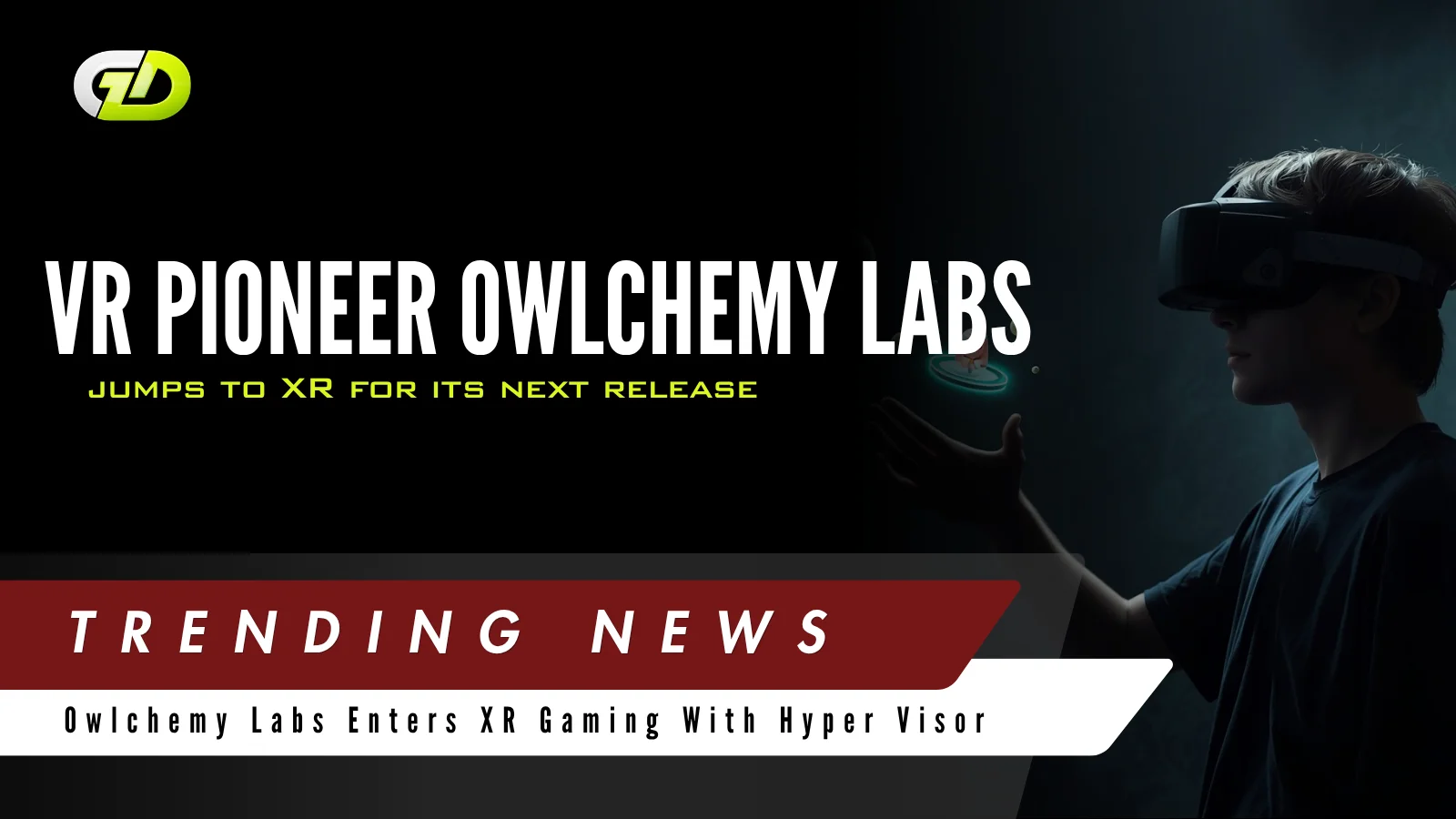
Owlchemy Labs Expands Into XR Gaming With Hyper Visor
Owlchemy Labs is expanding into XR gaming with Hyper Visor, an arcade title designed for glasses-style spatial computing eyewear. The project highlights how lightweight devices could open new opportunities for immersive gameplay and accessible gaming experiences.
Oct 23, 2026
Virtual reality developer Owlchemy Labs is expanding beyond traditional VR experiences with Hyper Visor, an original extended reality (XR) arcade game designed for the emerging category of lightweight, phone-connected spatial computing eyewear.
The studio describes Hyper Visor as an arcade blaster that combines hand-based interactions with gameplay inspired by familiar genres. Priced at $1.99, the game is scheduled to debut on the Google Play Store alongside the launch of HTC's XREAL Aura device.
Bringing Arcade Gaming Into Extended Reality
Hyper Visor introduces players to eight levels featuring different gameplay styles, including rhythm-based challenges and side-scrolling shooting sequences. Players use their hands and a pair of fictional living sunglasses to interact with the game, blending familiar arcade mechanics with an immersive, real-world viewing experience.
Unlike conventional VR headsets that typically enclose the user's field of vision, the XREAL Aura is designed as lightweight, glasses-style spatial computing eyewear. It connects to an Android phone, allowing compatible digital experiences to appear within the user's view of the surrounding environment.
Why Owlchemy Labs Is Exploring XR
Owlchemy Labs, known for its VR titles and simulation games, sees lightweight eyewear as a potential way to make immersive gaming more accessible.
CEO Andrew Eiche has highlighted the physical design of traditional VR headsets as a barrier for some potential users. Glasses-style devices could make spatial computing more approachable by offering a form factor that feels more familiar and less intrusive.
The studio's approach reflects a broader industry interest in making immersive experiences easier to access, particularly for users who may be reluctant to wear bulky headsets.
XR, AR, and VR: Understanding the Difference
Extended reality, or XR, is an umbrella term covering virtual reality (VR), augmented reality (AR), and related immersive experiences.
VR places users inside digitally created environments, while AR overlays digital elements onto views of the real world. Glasses-style spatial computing devices can support experiences that blend digital content with physical surroundings, depending on their hardware and software capabilities.
For developers, these distinctions matter when choosing interaction methods, designing environments, and optimizing games for different devices.
What This Means for the Gaming Industry
Owlchemy Labs' move into XR highlights how established VR developers can explore emerging platforms while applying their existing expertise in immersive interaction and game design.
Lightweight spatial computing eyewear could create new opportunities for short-session arcade games, hands-free interactions, and experiences that integrate digital elements into everyday surroundings. However, the platform's long-term success will depend on factors such as device adoption, comfort, technical capabilities, and the availability of compelling games.
For game development studios, Hyper Visor offers an example of how familiar gameplay concepts can be adapted to new hardware formats. As immersive technology continues to evolve, developers may find opportunities to reach new audiences by designing experiences around the strengths of each platform.
Owlchemy Labs' latest project reinforces an important industry trend: the future of immersive gaming may involve not only more powerful headsets, but also more approachable devices and new ways to interact with digital worlds.
Source: gamerdeveloper.com
Expert Insights
The move toward lightweight XR devices highlights how evolving hardware can create new opportunities for immersive game development. For every Game development company, adapting gameplay mechanics, user interactions, and performance optimization to emerging platforms can help unlock new audiences. As spatial computing evolves, studios that combine intuitive design with platform-specific development strategies may be better positioned to explore the next generation of interactive experiences.