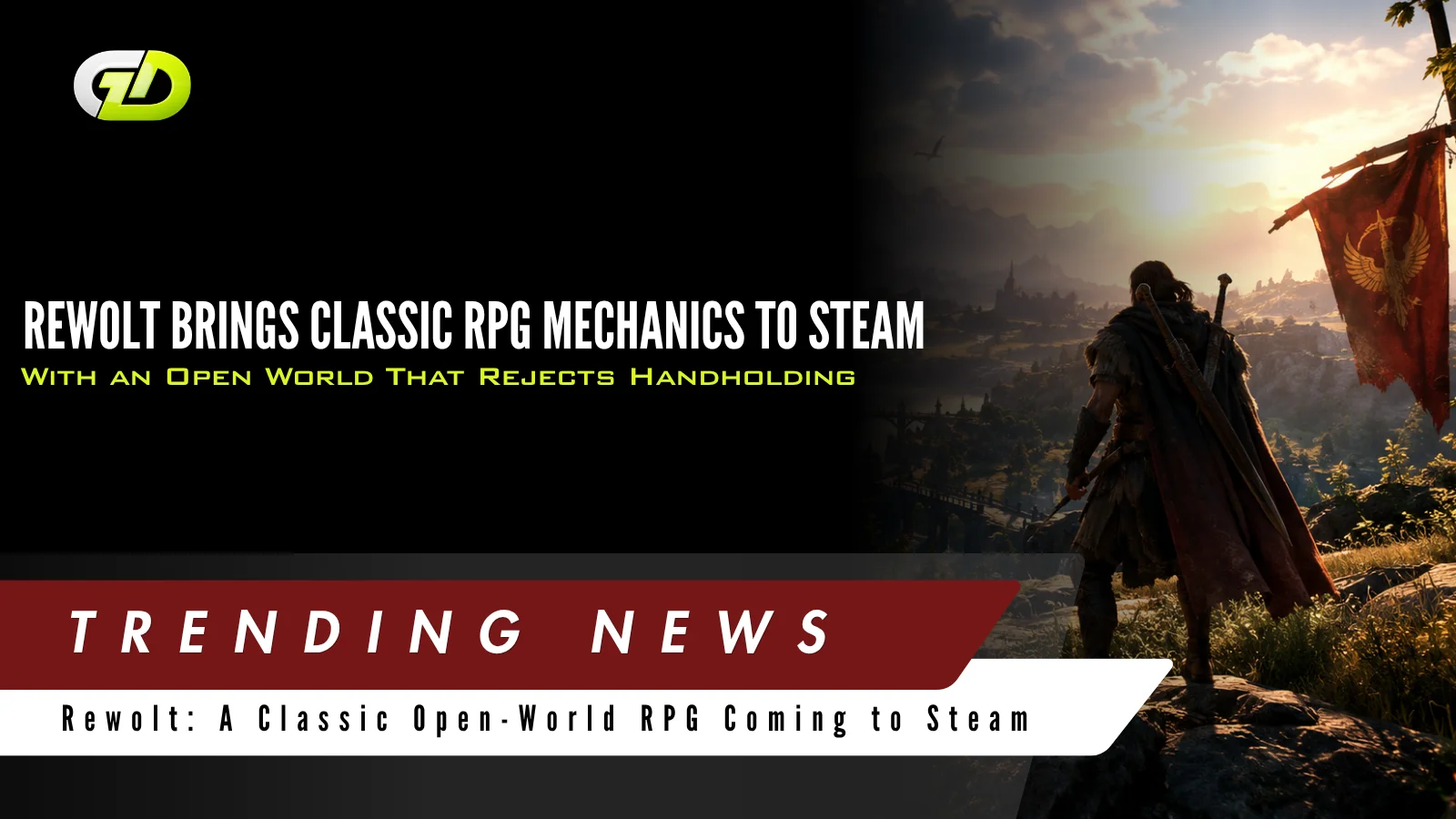
Rewolt Brings Classic RPG Mechanics to Steam With an Open World That Rejects Handholding
Rewolt is an open-world RPG from Mythic Wave that embraces classic game design with challenging combat, no enemy level scaling, branching faction stories, and NPCs with daily routines.
Oct 15, 2026
Open-world RPGs have increasingly adopted guidance systems designed to help players navigate their environments, solve puzzles, and progress through quests. However, upcoming RPG Rewolt, developed by Mythic Wave, is taking a different approach by embracing classic game design principles that reward exploration, skill, and player-driven discovery.
Rather than relying on constant visual cues or level scaling, Rewolt aims to give players greater freedom to explore its world while allowing their decisions and combat abilities to shape the experience.
Rewolt Revives Classic RPG Challenge
One of Rewolt’s defining features is its approach to exploration. The game avoids excessive handholding, encouraging players to investigate the environment and discover locations without constant directional assistance.
Its combat system also emphasizes player skill. Combos reward precise timing and positioning, while abilities operate on cooldowns instead of relying on stamina or mana systems that players might optimize to create overwhelmingly powerful builds. This approach applies across melee, ranged, and magic-based playstyles.
The game also rejects enemy level scaling. Dangerous creatures can occupy areas that players encounter early in their journey, meaning wandering too far into unfamiliar territory can lead to overwhelming encounters. Players can choose to test their skills against these threats or return later after becoming stronger.
By allowing enemies to retain their intended difficulty, Rewolt aims to make exploration less predictable and progression more rewarding.
Faction Choices That Transform the Open World
Set on the continent of Tellus, a land corrupted by a mysterious substance known as Woltium, Rewolt places players in the middle of a conflict between two opposing factions: Vallador and Delen.
Vallador is portrayed as a militaristic faction with Roman-inspired armor and expansionist ambitions. Delen, meanwhile, represents the continent’s native population, which seeks to cleanse the land and repel the invading forces.
After the player character returns from the dead, they must choose which faction to support. This decision influences the story’s direction, contributes to two different endings, and brings significant changes to the open world.
Each faction features its own hub and dedicated questlines. Across five branching chapters, players can become increasingly involved in their chosen side, with the surrounding environment changing as the conflict progresses. Supporting Vallador is expected to deepen the world’s corruption, while helping Delen may contribute to restoring the affected landscape.
These branching paths give players a reason to revisit the game and experience the consequences of the alternative faction choice.
Living NPCs Add Depth to the World
Although Rewolt draws inspiration from older RPG design, it also incorporates features associated with more modern open-world games.
Named non-player characters are designed to have lives beyond providing quests. According to the game's description, NPCs follow daily routines that include working, eating, sleeping, and other activities as the day progresses.
These routines aim to make the world feel more believable and encourage players to observe their surroundings rather than treating every character as a simple quest marker.
Combined with faction-driven world changes, challenging encounters, and less restrictive exploration, these systems could help create an open world that feels dynamic and responsive.
Can Rewolt Stand Out on Steam?
Rewolt combines classic RPG principles with modern open-world systems. Its emphasis on discovery, demanding combat, fixed enemy difficulty, faction-based storytelling, and simulated NPC routines offers an alternative to games that prioritize constant guidance.
The concept will ultimately depend on how well Mythic Wave executes these interconnected systems. If exploration feels rewarding and faction choices meaningfully affect the world, Rewolt could appeal to players seeking a more challenging and reactive RPG experience.
For fans who miss the uncertainty and sense of discovery associated with earlier role-playing games, Rewolt presents an intriguing approach to open-world design.
Source: Gamerant.com
Expert Insights
Rewolt highlights how meaningful exploration and player agency can distinguish an open-world RPG in a crowded market. Removing excessive guidance and level scaling can make discoveries feel earned, while faction-driven world changes give player decisions longer-lasting consequences.
For a Game Development Company, the key lesson is that open-world depth comes from interconnected systems, not simply map size. Combat, environmental storytelling, NPC behavior, and branching narratives should reinforce one another to create a world that feels responsive to player choices.
Key takeaway: A compelling open world does not need to guide players through every step; it needs to give them meaningful reasons to explore, experiment, and return.