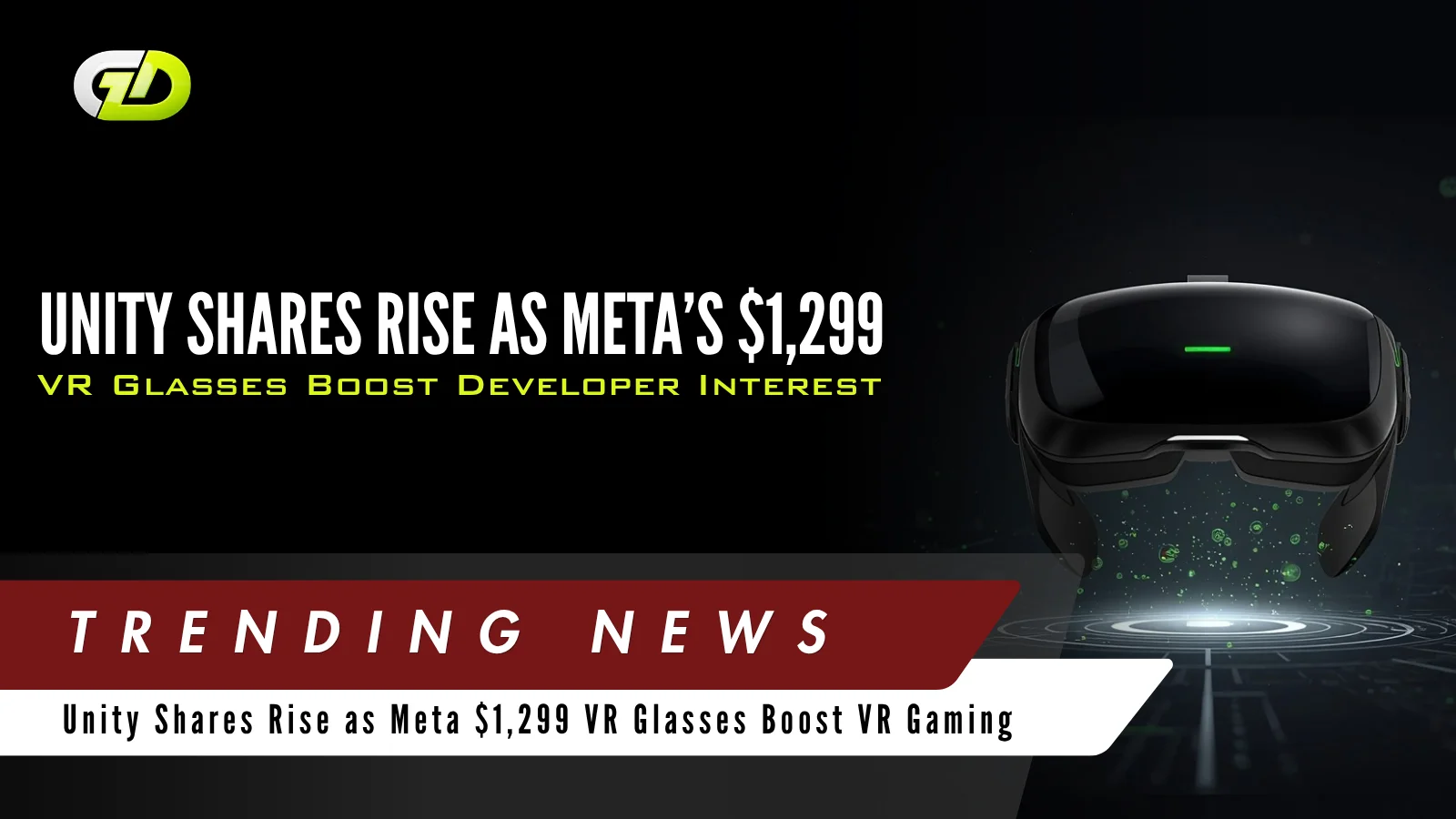
Unity Shares Rise as Meta’s $1,299 VR Glasses Boost Developer Interest
Meta's $1,299 VR Glasses and Unity's day-one development support are opening new opportunities for studios building next-generation VR games and immersive experiences.
Sep 25, 2026
Unity Software shares gained more than 5% in after-hours trading following Meta’s Connect 2026 announcements, highlighting the growing opportunity for game and immersive-experience developers as Meta expands its VR ecosystem.
Meta unveiled its new Meta VR Glasses, priced at $1,299 and scheduled to launch in spring 2027, during Meta Connect 2026. The announcement renewed attention on the software platforms developers will use to create games and immersive experiences for Meta’s next-generation hardware.
Unity is positioned closely within that ecosystem. On September 24, Unity announced day-one engine support for Meta VR Glasses, allowing developers to begin building and testing experiences ahead of the device's retail launch. Existing Quest applications built with OpenXR can also be carried forward using familiar Unity workflows.
Unity and Meta Deepen Their VR Partnership
Unity and Meta have maintained a long-standing relationship around VR development. In April 2026, the companies extended their multi-year platform support and enterprise agreement, with Unity continuing to support developers building applications and games for Meta's VR platform. Unity said its engine powers the majority of top-selling VR games on Meta's platform.
The relationship is becoming increasingly relevant as Meta expands beyond traditional VR headsets.
With Meta VR Glasses, developers can build experiences using Unity 6.6, OpenXR and Meta's XR tools. Unity also highlights support for eye and hand tracking, spatial audio, and development workflows that allow teams to preview VR Glasses interactions directly within the Unity Editor.
Meta's developer program is similarly emphasizing broader support for game engines, with Connect 2026 sessions covering development with Unity, Unreal and native engines.
Why Meta VR Glasses Matter for Developers
The new hardware gives developers another potential platform for games, entertainment and interactive applications.
Meta says the VR Glasses weigh around 100 grams and are designed to provide immersive experiences in a glasses-style form factor. They use the same operating system, store, and payment platform as Meta Quest, while introducing eye and hand-based interactions as key input methods.
For developers, this creates an opportunity to adapt existing VR projects while exploring new interaction models designed specifically around lighter hardware and controller-free experiences.
Unity's day-one support also gives studios several months to develop, test and optimize experiences before the hardware reaches consumers in spring 2027.
Unity's Broader Growth Story
The Meta announcement comes as Unity continues to expand its position across gaming, mobile and extended reality.
The company's growing focus on AI-powered development and advertising tools adds another dimension to its business, while its continued partnerships with major technology platforms provide developers with additional deployment opportunities.
The Meta relationship is particularly relevant because the growth of a hardware ecosystem can create demand for the software, tools and content required to make those devices useful to consumers.
What It Means for the Gaming Industry
Meta's latest VR hardware announcement is more than a new-device launch. It also signals an expanding development opportunity for studios working in VR, mixed reality and immersive gaming.
With Unity support available from day one, developers can begin preparing experiences before Meta VR Glasses officially launch. As the VR ecosystem evolves, access to familiar development tools and cross-platform workflows could help studios bring existing projects to new audiences while experimenting with new forms of immersive gameplay.
Source: Finace.biggo.com
Expert Insights
From a Game Development Company perspective, Meta VR Glasses show how new hardware can create fresh opportunities for studios to build immersive games, explore new interactions, and reach emerging VR audiences.
Trending News