LiveOps vs Traditional Game Updates: Which Delivers Better ROI?
Discover how Game LiveOps outperforms traditional game updates by improving player retention, engagement, monetization, and long-term ROI for modern games.
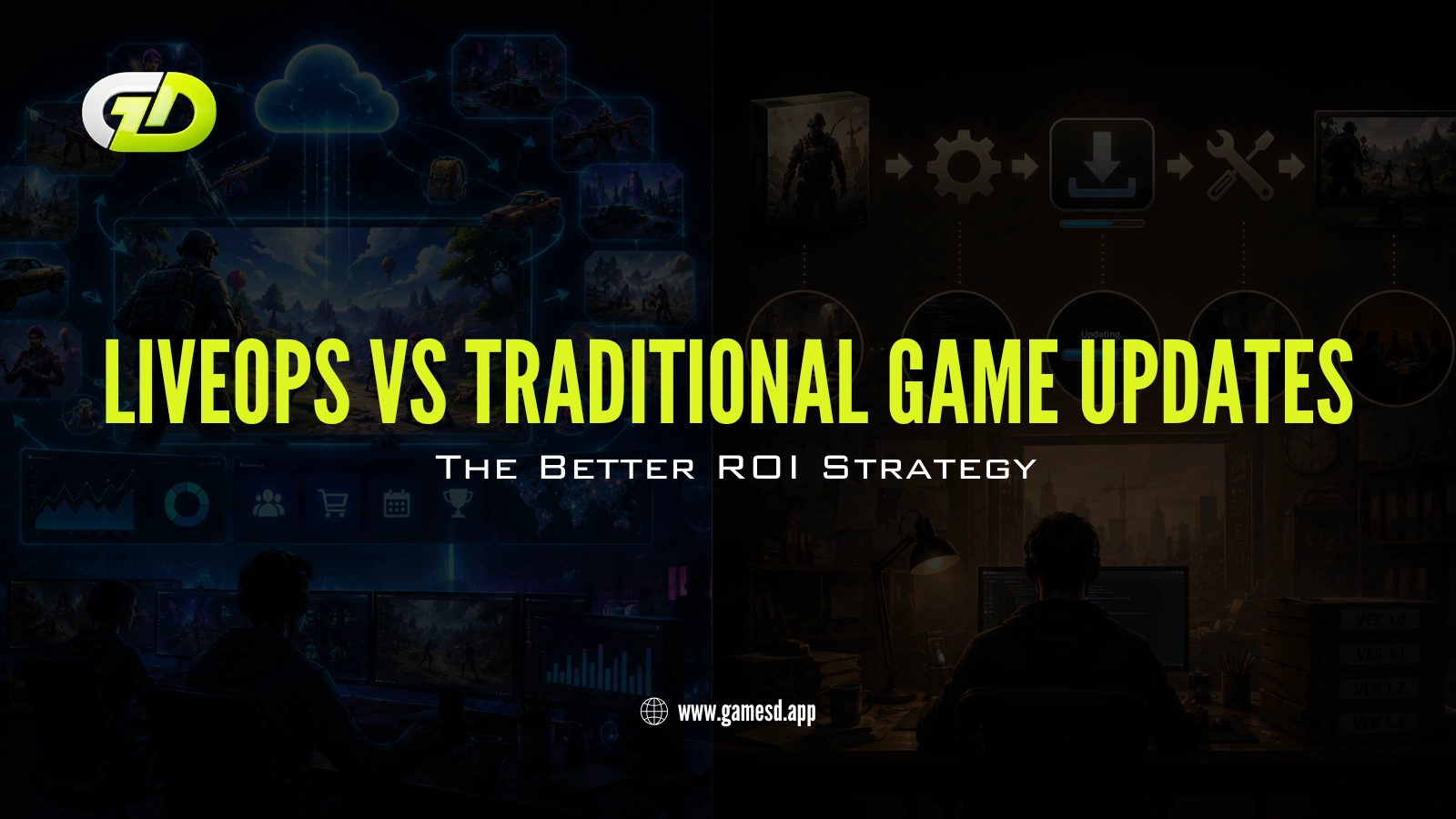
Gaming today is no longer about launching the game and providing updates from time to time. Gaming companies need to ensure that players get interesting experiences, new content, special events, and improvements to gameplay to attract more gamers.
The above-mentioned changes have turned LiveOps into one of the integral parts of game development. Instead of using a traditional way of updating, developers are trying to provide new content, improve the gaming experience of users, and make sure that all monetization opportunities are being used. With player retention becoming a key performance indicator, businesses need to choose what will bring more return on investment (ROI).
In the following blog, we will discuss LiveOps and traditional game updates and how they affect the engagement and profits of the business. We will explain why Game LiveOps Services will be the future of the gaming industry.
Understanding Traditional Game Updates
Traditional game update systems use a scheduled release plan whereby developers periodically release fixes, DLCs, expansions, or upgrades to the game itself. This strategy is usually set to be implemented months in advance and delivered at particular milestones.
Some of these are:
- Seasonal DLC release
- Gameplay upgrade patches
- Expansion pack release
- Game optimization
- Creation of new maps, characters, and modes
This method has been proven to work over time for many games, but it results in lengthy gaps between the release of new content. In such times, the engagement of players tends to drop off gradually.
Traditional update systems tend to work well with premium games that don’t need constant engagement from players. However, live-service games call for different approaches to releasing content to the players.
What are Game LiveOps Services?
Game LiveOps Services is the ongoing management, optimization, and improvement of live games following their release. The company does not have to wait months to provide new updates. Rather, it constantly updates content and other elements depending on the player’s activity and feedback.
Game LiveOps allows gaming companies to:
- Launch limited-time events
- Provide personalized experiences
- Optimize monetization efforts
- Improve player retention
- Provide frequent content updates
- Constantly analyze game performance
- Balance game performance in real time
- Most successful live-service games use the approach of LiveOps.
LiveOps vs Traditional Game Updates: Key Differences
| Factors | Traditional updates |
LiveOps |
| Content Delivery | Periodic | Continuous |
| Player Engagement | Moderate | High |
| Monetization Opportunities | Limited | Dynamic |
| Data-Driven Decisions | Minimal | Extensive |
| Event Management | Scheduled Releases | Real-time Events |
| Retention Strategy | Content Based | Continous Engagement |
| Scalability | Moderate | High Scalable |
| ROI potential | Medium | High |
The essential distinction is reactivity. Traditional updates are scheduled around development timetables, whereas LiveOps changes based on player choices and company objectives.
How Does LiveOps Improve ROI?
Increased Player Retention
Retaining existing players is far more cost-effective than adding new ones. LiveOps focuses mainly on keeping players engaged by:
- Daily challenges.
- Seasonal incentives.
- Exclusive events.
- Personalized promotions
- Community-based tournaments
Frequent interactions encourage players to return on a regular basis, which boosts both engagement and lifetime value.
Continuous Monetization Opportunities
Traditional monetization techniques frequently rely on large content releases. In comparison, LiveOps generates numerous business opportunities by:
- The battle has passed.
- Limited-time offers.
- Seasonal content.
- Exclusive cosmetic items.
- Dynamic in-game events.
These recurrent monetization techniques contribute to the game's long-term revenue streams.
Real-time Performance Optimization
LiveOps personnel are always monitoring gaming metrics to identify:
- Drop-off points.
- Purchasing behavior
- Engagement Patterns
- Gameplay balance issues
- Event performance metrics
This data-driven strategy enables quick optimization, which improves player satisfaction and income production.
Faster response to market trends
Gaming trends change swiftly. Traditional update processes may require months of development before new concepts are introduced. LiveOps enables organizations to respond promptly by:
- Launching themed events.
- Introducing trending gaming mechanics.
- Testing new monetization tactics.
- Changing content depending on player response
- This adaptability boosts a game's competitiveness in the market.
When Traditional Updates Still Make Sense?
Despite the benefits of LiveOps, traditional updates are still useful in some cases.
They work especially effectively for:
- Single-player games.
- Story-driven experiences.
- Premium console titles.
- Independent games with small communities
- Expansion-based revenue models
For games that do not require constant participation, regular content releases may provide adequate value while decreasing operational complexity. However, multiplayer, mobile, blockchain, and free-to-play games are increasingly benefiting from LiveOps-driven ecosystems.
The Growing Importance of LiveOps in Modern Gaming
Today’s successful games are not just products; they are dynamic digital ecosystems that change with time. Users require a new experience every single time they use them.
Modern Game LiveOps Services include:
- Seasonal content management
- Community engagement strategies
- Monetization via events
- Real-time analytics integration
- Cross-platform gameplay
- Content distribution
With the above features, developing a game is not a one-off process anymore; it’s a continual process of innovation and improvements.
LiveOps for the gaming industry reduces risks that come with rolling out large volumes of content through continuous optimizations.
Which Delivers Better ROI?
- LiveOps provides considerable ROI advantages for games focused on player engagement and long-term monetization.
- Traditional upgrades bring value through significant content increases, but they sometimes struggle to sustain consistent interest between releases. LiveOps generates several touchpoints that boost retention, expand monetization potential, and deliver useful player analytics.
- The best option ultimately depends on your game's financial model.
- Traditional updates are best suited for premium and narrative-driven products.
- LiveOps is ideal for multiplayer, mobile, blockchain, and live-service games with long-term growth potential.
- Continuous engagement tactics are often more effective in terms of long-term returns for companies seeking to optimize player lifetime value.
Conclusion
The future of gaming belongs to experiences that continuously evolve. While traditional game updates remain relevant, LiveOps has become the driving force behind higher player engagement, recurring revenue, and long-term business growth. For modern multiplayer, mobile, blockchain, and live-service games, investing in Game LiveOps Services is no longer optional; it is a competitive necessity.
By leveraging data-driven strategies, real-time optimization, and dynamic player engagement, gaming businesses can maximize ROI and build sustainable gaming ecosystems. The right LiveOps strategy keeps players engaged while unlocking new monetization opportunities throughout a game's lifecycle.
As a leading Game Development Company, GamesDapp delivers end-to-end Game LiveOps Services that enhance player experiences, boost engagement, and drive sustainable growth. Whether you're launching a new game or scaling an existing one, GamesDapp helps turn your game into a profitable and long-lasting live-service success.
Let's Connect With Us


You’re just one step away from transforming your dream game into a blockchain-powered reality. Get A Live Demo Today