2D vs 3D Game Development - A complete guide to understand the difference.
Explore the core differences between 2D and 3D game development in this comprehensive guide by Gamesdapp. Learn which style suits your game project, budget, and target audience better.
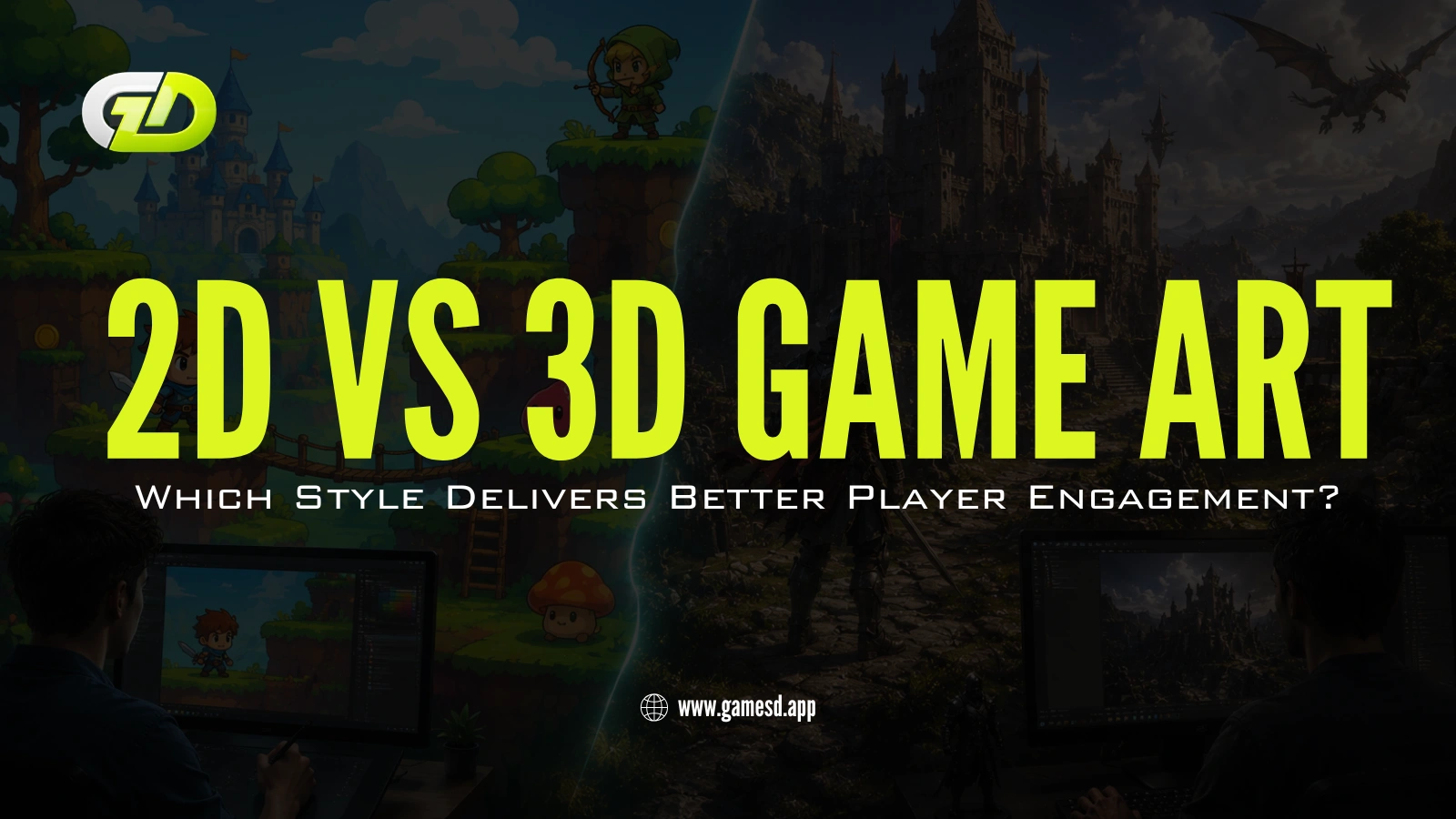
The moment the players become aware of the existence of a particular game, they start observing its art. This is what first attracts the gamer even before getting acquainted with the gameplay, mechanics, or plot of the game. Irrespective of whether the art of the game is of a bright 2D or 3D open world genre, the art plays an integral part in grabbing the attention of the gamer.
Currently, the game designers have the option of choosing between two basic styles of art in games: 2D and 3D game art. Both these styles differ greatly from each other depending upon the objective, target audience, budget, and platform of the game. Even though 2D is simple and captivating, the 3D art offers immersive gameplay that holds the gamer’s attention for a much longer period.
What is 2D Game Art?
2D game art refers to visual elements created in two dimensions: height and width. Characters, backdrops, animations, and user interfaces are rendered as flat images or sprites with no depth. This style has been popular since the inception of gaming and continues to thrive in independent games, mobile games, puzzle games, and so on.
One of the main advantages of 2D game art is its artistic variety. Developers can offer unique game experiences by merging pixel graphics, hand-drawn imagery, cartoon pictures, and minimalist design. 2D assets use fewer resources; therefore, development is frequently faster and less expensive. Furthermore, 2D games work well on a wide range of devices, making them more accessible to a larger audience.
What is 3D Game Art?
- Three-dimensional game art involves creating characters, environments, objects, and animations in three dimensions. These artists use certain modeling, textures, rigging, and computation methods in order to develop a realistic and captivating gaming world.
- Today, 3D visuals are widespread in action games, role-playing games, racing games, simulation games, and first-person shooter games since this type of visual allows for a much deeper immersion into the game as well as allows for camera movement and interaction with realistic people.
- Although creating 3D art requires a lot of time, skills, and financial resources, it provides an engaging gaming experience to those who enjoy playing realistic games. Thanks to the development of gaming technology, three-dimensional game art has become quite popular among gamers.
2D vs 3D Game Art: A Side-by-Side Comparison
| Aspects | 2D Game Art | 3D Game Art |
| Visual style | Flat, artistic, and stylized | Realistic, detailed, and immersive |
Development time |
faster assets creation | Longer production process |
| cost | Lower development cost | Higher investment required |
| Performance | Optimized for most devices | Requires better hardware |
| Gameplay experience | Simple and intuitive | Interactive and immersive |
| Best suitable for: | Mobile, indie, puzzle, platform games | RPGs, FPS, racing, simulation, AAA games |
Both art forms have their advantages. While 2D focuses on usability and creativity, 3D stresses realism and discovery. The proper decision is determined by the game's goals rather than the popularity of a specific style.
How 2D Game Art Drives Player Engagement
- Despite the rise of realistic visuals, 2D game art continues to captivate millions of gamers worldwide. One important factor is its simplicity. Players may rapidly grasp characters, environments, and gameplay principles without being overwhelmed by elaborate images.
- Another advantage is nostalgia. Many successful indie games have pixel imagery or hand-drawn styles that evoke classic gaming experiences while incorporating new gameplay aspects. This emotional link generally boosts player involvement.
- 2D games also load faster, need fewer device resources, and run smoothly on smartphones and low-end PCs. Their accessibility enables developers to reach a larger audience. With brilliant colors, inventive animations, and intuitive design, 2D game art creates delightful experiences that keep players coming back.
How 3D Game Art Enhances Player Engagement
- 3D game art creates immersive experiences through the creation of virtual worlds that are realistic and engaging. The player is free to move around places, interact with objects, and even create cinematic experiences that form emotional connections.
- Realistic animation of characters and environs helps create immersion, such that the player feels he or she is an active participant and not just an observer of a video game. Lighting, shadows, textures, and visual effects enhance the whole gaming experience.
- Multiplayer games get a lot from 3D graphics since they enable interaction of players in large environments. Exploration of the environment, customization of characters, and dynamic game mechanics ensure long gaming sessions. Games with themes of realism and exploration greatly benefit from 3D art.
Which Style Should You Choose?
- The choice between 2D and 3D game art is determined by the aims of the particular project, not by the prevailing market trends.
- If you are developing a casual mobile game, a puzzle game, an educational application, or a low-budget indie game, 2D game art is the perfect option for your game.
- Alternatively, if you are going to develop an exciting RPG, simulation game, racing game or a multiplayer adventure game, 3D game art may be a good idea for you.
- Several issues like the target audience, the budget of the development, the schedule, the platform, and business purposes will determine your choice. The key to success is the combination of great game mechanics and proper visuals.
How GamesDapp Helps Create Engaging Game Art
At GamesDapp, a leading game development company, we excel at creating visually stunning 2D and 3D game art for a wide range of gaming projects. Our skilled artists specialize in concept art, character design, environment creation, game assets, animations, and UI/UX design, ensuring every visual element aligns perfectly with your game's vision, style, and player expectations.
Whether you're developing an indie mobile game or a large-scale multiplayer title, we deliver custom game art tailored to your unique requirements. From initial concepts to production-ready assets, our experienced team collaborates with startups, gaming studios, and enterprises to transform innovative ideas into immersive gaming experiences.
Conclusion
Both 2D and 3D game art have effectively proved their ability to engage players when used properly. Although 2D game art has advantages in terms of accessibility, artistic freedom, and production speed, 3D game art provides immersive gameplay, realistic storytelling, and better player engagement. It all depends on the sort of game, your target audience, budget limits, and commercial objectives. GamesDapp will help startups, gaming studios, and organizations create gorgeous 2D and 3D game art that will maximize user engagement.
Let's Connect With Us


You’re just one step away from transforming your dream game into a blockchain-powered reality. Get A Live Demo Today